Bread has been part of the human diet for thousands of years. Yet today, many people feel bloated, foggy, inflamed, or exhausted after eating it — even when they don’t have celiac disease or a confirmed allergy. They’ve been tested, told everything looks fine, and yet their body keeps responding in ways that don’t feel fine at all.
From a Functional Medicine perspective, this isn’t about willpower or following a trend. It’s about understanding how modern bread has fundamentally changed — and how those changes affect digestion, hormones, the immune system, and nutrient balance in ways that conventional testing often doesn’t capture.

Bread Isn’t What It Used to Be
Traditional bread was made from whole grains, naturally fermented over time, and eaten in modest amounts as part of a broader, nutrient-dense diet. Modern bread is a different product entirely. It is highly refined, quickly processed, fortified with synthetic nutrients, and engineered for shelf life and convenience rather than for what the body can actually recognize and use.
While fortification was introduced to prevent nutritional deficiencies — and in that narrow goal, it succeeded — it did not restore the original biological integrity of the grain. And that distinction matters enormously to the body.
What Fortification Really Means for Your Body
When grains are refined, the most nourishing parts — the bran, the germ, the fiber, the co-nutrients — are removed. To compensate, manufacturers add back a short list of synthetic vitamins and minerals, most commonly iron and B vitamins like folic acid. On a label, this looks reassuring. In the body, it’s more complicated than it appears.
Digestion Comes First
Functional Medicine always begins with digestion. If food isn’t broken down properly, nutrients cannot be absorbed — regardless of how fortified the food is. Refined, fortified bread lacks the fiber that supports beneficial gut bacteria, still contains compounds that can block mineral absorption, and bypasses the traditional fermentation process that historically made bread far easier for the body to digest. For many people, this combination contributes to bloating, gas, reflux, or irregular digestion that accumulates quietly over time.
Synthetic Nutrients vs. Food-Based Nutrition
The body recognizes nutrients differently depending on their form — and this is one of the most important distinctions in Functional Medicine nutrition. Fortified bread contains synthetic folic acid, not natural folate. Some individuals have a harder time converting folic acid into its biologically active form, which may affect energy production, hormone balance, detoxification capacity, and mood and focus. The question in Functional Medicine is never just whether a nutrient is present — it’s whether it’s actually usable by that particular body.
Gut Health and Immune Signaling
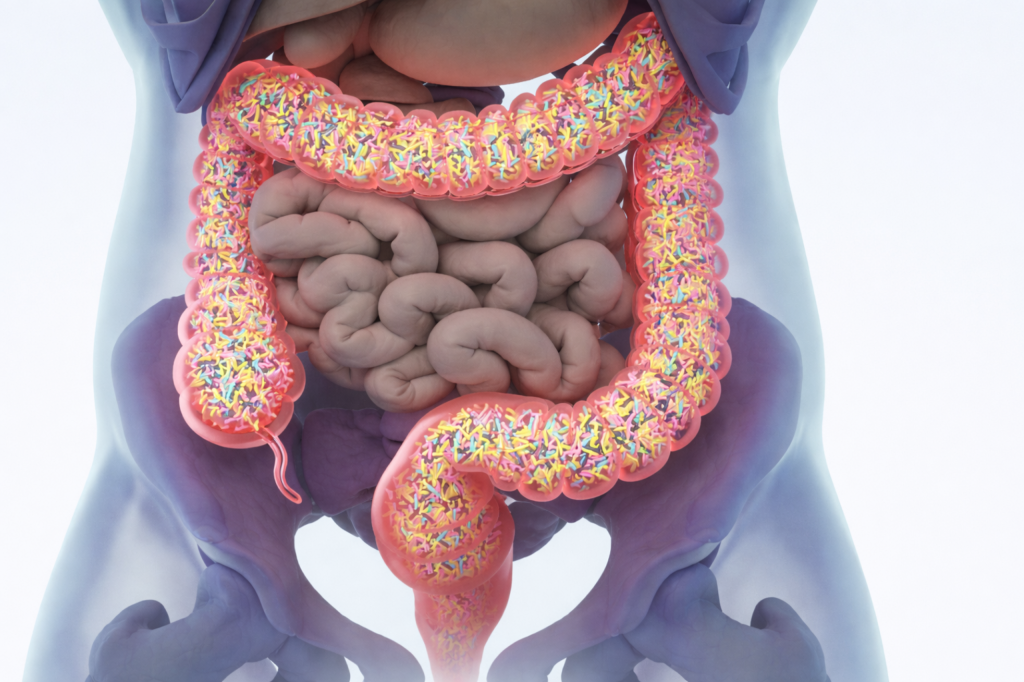
Approximately 70% of the immune system lives in the gut — and when the gut lining is chronically irritated or overwhelmed by refined carbohydrates, additives, or poorly absorbed nutrients, the immune system can become overactivated. Over time, this may surface as food sensitivities, skin flares, joint discomfort, persistent fatigue, or inflammatory and autoimmune symptoms that seem to have no clear source.
This doesn’t mean bread is inherently “bad.” It means this particular version of bread may be sending low-grade stress signals to the body that compound in ways that are difficult to trace without looking at the gut directly. At The Miracle Wellness Center, we offer testing to help identify gut health triggers and imbalances — including cellular nutrient status — so patients can feel genuinely informed about what’s driving the symptoms they’ve been trying to manage.
If bread leaves you feeling worse instead of nourished, it may not be your body that’s the problem. It may simply be asking for food it recognizes — food that supports healing rather than just adding calories on a label.
— DR. LYNN DUHE, PhD-IM, FNP-BC, FNP-C
Blood Sugar, Hormones, and Energy
Refined flour converts quickly into sugar in the bloodstream — leading to blood sugar spikes and crashes, increased insulin demand, energy dips, intensified cravings, and compounding hormonal stress. For individuals navigating fatigue, thyroid concerns, menopause symptoms, or anxiety, modern bread can quietly add to the body’s overall workload — even when it’s fortified with vitamins and marketed as a wholesome choice.
Why Some People Feel Better Without Modern Bread
Many patients notice meaningful improvements when they reduce or remove conventional modern bread from their diet — less bloating, clearer thinking, better sustained energy, and reduced inflammation. This is not because their body is broken or “intolerant” in a dramatic sense. Often, it’s because the body is responding appropriately to a food that no longer functions the way it once did when it was traditionally prepared and consumed.
Is All Bread Off the Table?
Not necessarily — and this is where Functional Medicine differs from blanket dietary rules. Some people tolerate long-fermented sourdough well. Others do better with bread made from heritage or ancient grains with minimal ingredients and traditional preparation. And others benefit from a temporary break that gives the gut and immune system space to reset before reintroducing.
Functional Medicine focuses on individual response, not universal restriction. Finding the root of digestive challenges is always the goal — and advanced digestive health testing is often an excellent place to begin that investigation.
The Takeaway
Fortification helped prevent deficiency — but it did not restore real nourishment. From a Functional Medicine standpoint, health comes from whole foods, proper digestion, balanced and bioavailable nutrients, and foods the body can genuinely recognize and process. If bread consistently leaves you feeling worse instead of nourished, it may simply be asking for a different kind of support — not restriction for its own sake, but understanding of what your specific body actually needs.
If you’re curious how your digestion, gut health, or nutrient balance may be influencing how you feel after eating bread — or after eating anything — we’re here to help you understand those signals and build a personalized plan that supports long-term wellness rooted in actual biology.
Contact Us
The Miracle Wellness Center
📞 225-277-2488 (TEXT or CALL)
📧 beewell@miraclecenterbr.com
📍 10771 Perkins Rd, Suite C, Baton Rouge, LA
Ready to take your first step? Click here to book your First Step Call — $99
A Note of Intention
This space is meant to educate, not to diagnose. The words shared here are offered as learning, reflection, and curiosity—never as a substitute for personalized medical care. Every body carries its own story, its own history, its own rhythm. What applies to one may not apply to another.
If something here resonates with you, let it be an invitation—to ask questions, to seek guidance, to explore next steps with a qualified healthcare professional who knows you. Healing is not one-size-fits-all, and true care is always personal.
May this information serve as a lantern, not a prescription—lighting the path, while honoring the wisdom of individualized support.
Some of the links on this page may be affiliate links. The Miracle Wellness Center may earn a small commission from qualifying purchases through this link at no additional cost to you. We only share products aligned with our Functional and Integrative Medicine philosophy.